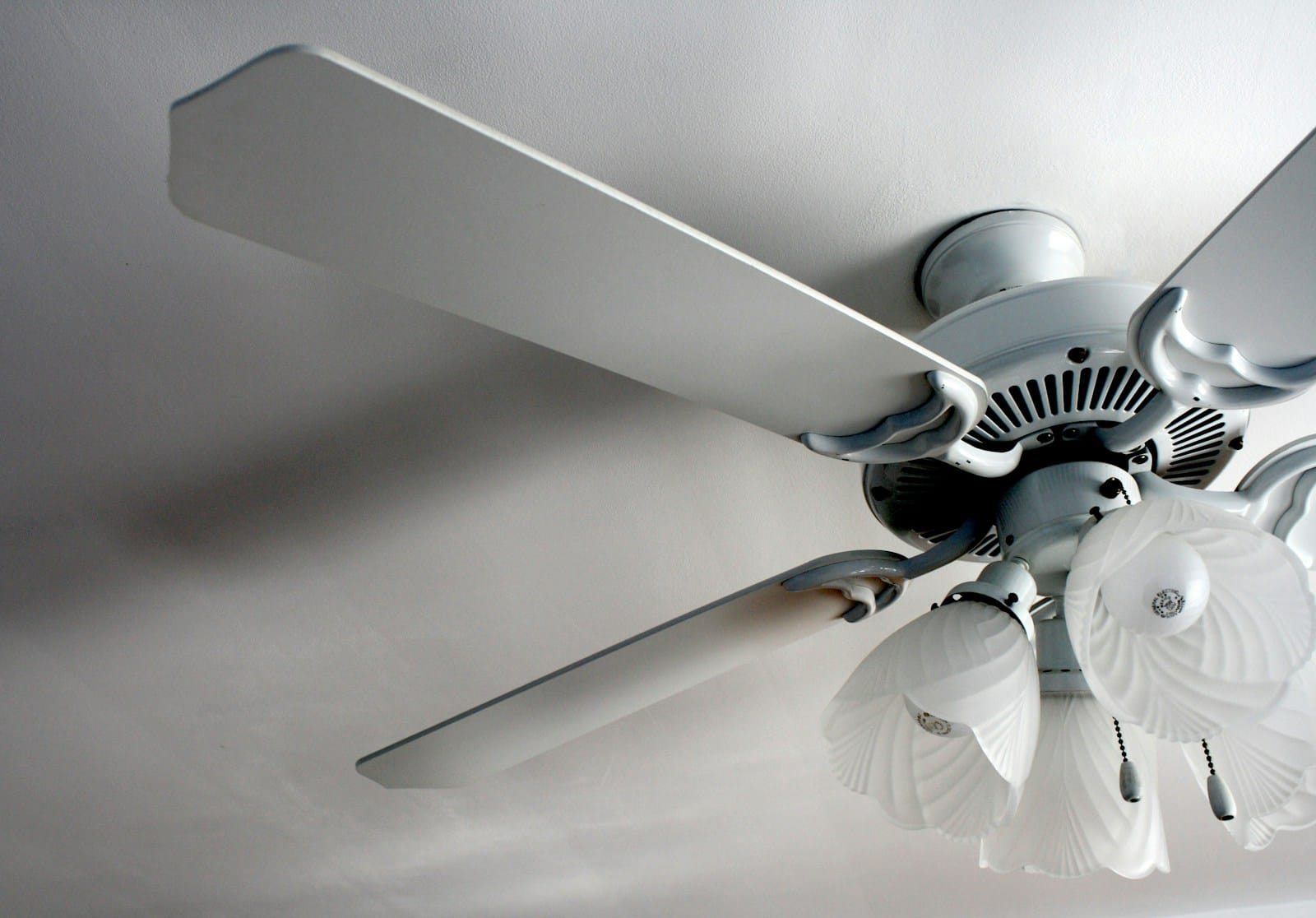
When your ceiling fan won’t start, it’s frustrating, especially when the Sacramento heat hits and the room feels like an oven. Homeowners think fans “just die,” but that’s rarely the real story. Around here, it’s usually a mix of overheated motors, old wiring, cheap capacitors, worn switches, and fan boxes that were never built for modern fans.
Our team sees this across Fair Oaks 60s builds, Carmichael remodels, Folsom add-ons, and newer Rocklin homes that use budget-grade fans with components that burn out fast. If your ceiling fan won’t start, something upstream is failing — and it’s almost always obvious once we open the canopy.
Let’s walk through the actual reasons it fails and how we fix it cleanly.
What Homeowners Notice (Symptoms)
Here’s what Sacramento homeowners usually see when a ceiling fan won’t start:
- Fan hums but never spins
- Light works, but the fan is dead
- Blades nudge slightly, then stop
- Fan only runs on low (or not at all)
- Switch does nothing
- Pull chain feels loose or unresponsive
- A burnt smell from the fan canopy
- Fan worked yesterday — today it’s silent
These aren’t random. They’re each tied to a predictable failure point.
Why It Happens in Sacramento Homes
Heat, wiring age, and cheap fan parts — that’s the Sacramento combo.
1. Burned-Out Capacitor (Most Common)
This is Sacramento’s #1 reason a ceiling fan won’t start.
Capacitors hate heat. And our summers bake attics and ceiling boxes. Once the capacitor fails, the fan loses starting torque. It hums or sits dead.
2. Motor Overheating
Fans run nonstop in July–September. Cheaper motors can’t handle it.
Once windings get scorched, startup torque drops to zero.
3. Bad Wall Switch or Pull Chain
Loose contacts, cheap switches, old dimmers (fans should never be on dimmers) — these kill fans fast.
Carmichael and Fair Oaks homes are full of switches from the 70s and 80s that are way past their lifespan.
4. Loose Neutrals in Older Homes
Common in Fair Oaks and Carmichael wiring eras.
Loose neutrals = inconsistent power = fan won’t start.
5. Folsom Additions With Mixed Wiring
We see copper tied to aluminum all the time. When connections loosen, fans lose current and fail to start.
6. Not a Fan-Rated Box
A lot of Sacramento ceiling boxes were meant for lights only.
Add a fan → vibration → loose wires → fan failure.
7. Overloaded Circuit (Lights + Fans + Smart Devices)
Fans on lighting circuits with smart switches, LEDs, and extra loads often get starved of stable power.
When a ceiling fan won’t start, this is why in many newer Roseville builds.
8. Dead Pull-Chain Switch
If the internal chain assembly breaks, the fan motor never gets the signal to start.
Every one of these is a straightforward fix — once you know where the fault is.
Risks of Ignoring the Issue
A fan that won’t start isn’t harmless. The failure is usually electrical.
Ignoring it leads to:
- Motor overheating
- Wiring insulation damage
- Arcing inside the canopy
- Switch burnouts
- Loose splices heating up
- Fan eventually falling if the box is failing
When a ceiling fan won’t start, something upstream is stressing out — and that stress always spreads.
Our Step-by-Step Process
We don’t guess. We diagnose.
1. Pull the Fan Canopy
We check all splices, wirenuts, and heat damage — especially in older wiring.
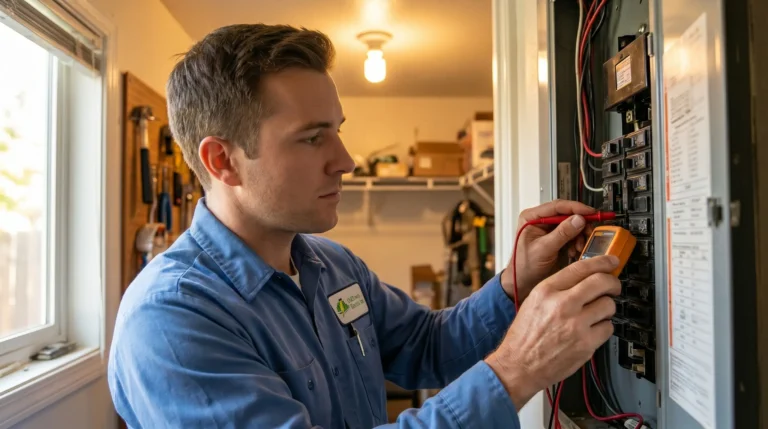
2. Test the Capacitor
Capacitors fail constantly in Sacramento heat. One quick meter test tells us the truth.
3. Inspect the Switch
Loose screws, wrong switch type, or burned switch contacts are common.
4. Check the Box Rating
We confirm whether it’s fan-rated or light-only. Half the fans we repair weren’t installed on proper boxes.
5. Motor Resistance Check
We test the windings. High resistance = burned motor = replacement time.
6. Voltage Testing
Some rooms simply don’t deliver enough stable power for modern fans.
7. Blade + Housing Inspection
Bent blades or unbalanced fans often point to deeper vibration issues that kill components.
8. Circuit Integrity
We make sure the fan isn’t on a heavily loaded lighting circuit.
When we’re done, you know exactly why the ceiling fan won’t start — no guessing, no upselling.
Cost Factors
Costs shift based on:
- Whether the capacitor or motor failed
- If the fan is worth repairing
- Whether the switch needs replacing
- Wiring condition in the ceiling
- Box upgrade requirements
- Ceiling height or access difficulty
- Age of the existing fan
Repairs can be minimal or involve replacing the entire fan and upgrading the ceiling box to fan-rated hardware.
Common Misconceptions
- “If the light works, the fan should work.”
No. They run on separate circuits inside the same fixture. - “The fan motor just died.”
Usually the capacitor died, not the motor. - “A new remote or pull chain will fix everything.”
If wiring or the capacitor is failing, no accessory will fix it.
Why Local Electricians Matter
You want electricians who understand:
- Fair Oaks aluminum wiring
- Carmichael 60s/70s switch loops
- Folsom additions with mismatched wiring
- Rocklin homes using budget-grade fans
- Sacramento attic heat destroying capacitors
- Roseville circuits overloaded with LEDs + fans
Local problems need local diagnostics.
When homeowners search for the best electrical troubleshooting & repair in Sacramento, they need someone who knows these wiring eras cold.
That’s how we fix fans quickly — by understanding how Sacramento homes are actually built.
Benefits for Homeowners
Fixing a fan issue the right way gives you:
- Reliable airflow
- Safer wiring in the ceiling
- No more hums, stalls, or dead starts
- Longer fan lifespan
- Better energy efficiency
- Quiet operation
- Peace of mind during heat waves
It’s not “just a fan.” It’s a motor hanging over your head. Getting it right matters.
Conclusion
If your ceiling fan won’t start, something upstream is failing, the capacitor, motor, wiring, switch, or the ceiling box itself. These issues don’t fix themselves, and they tend to get worse fast, especially in Sacramento’s summer heat.
You want local electricians who know the wiring patterns, the attic temperatures, and the old switch types Sacramento homes are full of.
Start here:
See our electrical repair services in Sacramento
When you’re ready, our team will find the fault, fix it cleanly, and get your ceiling fan spinning again. No guesswork. No wasted parts. No nonsense.