If you’re a homeowner in the Sacramento area wondering how many amps your home really needs, you’re not alone. I’ve been in this trade for years, and I can tell you—this question comes up more often than you’d think. Between older homes, new appliances, and the rise of electric vehicles, it’s easy to outgrow your electrical service without realizing it.
Let’s break it down in plain terms.
Table of Contents
What “Amps” Actually Mean for Your Home
When people ask how many amps their home needs, what they’re really asking is how much electrical capacity they have. Think of amps like the width of the pipe that brings electricity into your home. The wider the pipe, the more current can flow safely.
- Older homes built before the 1980s often have 60-amp or 100-amp service.
- Modern homes typically have 200 amps or more.
- Large or high-demand homes especially with electric heating, pools, or EV chargers—may need 300 to 400 amps.
In neighborhoods like East Sacramento, Curtis Park, and Land Park, I still run into homes with original 100-amp panels. They were fine when all you had was a fridge, a TV, and a few lights. But throw in central air, a second fridge, and a Tesla charger, and you’re pushing that system past its comfort zone.
How to Tell What Size Service You Have
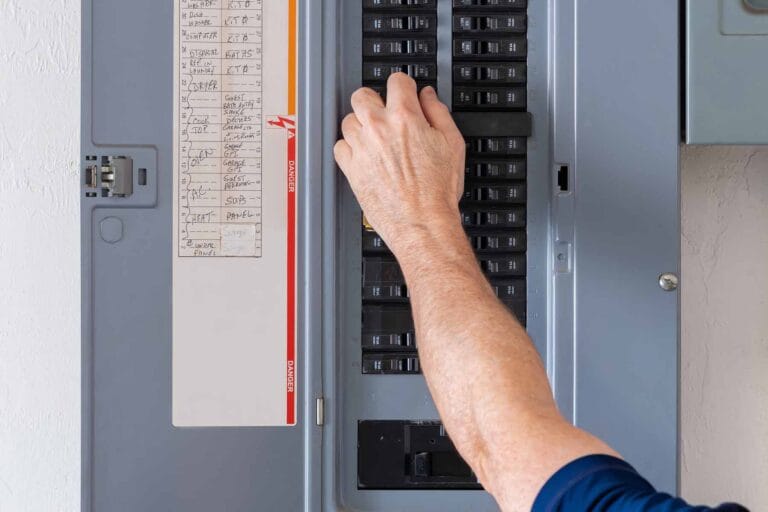
You don’t need to be an electrician to do a quick check. Head to your main electrical panel and look at the main breaker it’s usually labeled 100, 150, or 200 amps. That’s your service size.
A few clues you might be underpowered:
- Your lights dim when large appliances start up.
- Breakers trip when you run too many things at once.
- You’ve run out of open spaces in the panel.
- You’re adding high-draw equipment like a spa or EV charger.
If any of those sound familiar, it’s worth having a licensed electrician inspect your system.
How Many Amps Do You Really Need?
Here’s a general guide based on what I’ve seen across Sacramento homes:
| Home Type | Typical Electrical Service |
|---|---|
| Older/small homes under 1,500 sq ft (mostly gas appliances) | 100 amps |
| Modern homes 1,500–3,000 sq ft (electric range, AC, washer/dryer) | 200 amps |
| Large homes or homes with EV chargers, pools, or workshops | 300–400 amps |
Sacramento-specific factors:
- Hot summers mean more air conditioning usage.
- New developments in Folsom, Elk Grove, and Roseville often already come with 200-amp panels—but homeowners still add EV chargers and solar.
- Historic homes in Midtown and East Sac often need service upgrades before remodels or solar installs.
From what I’ve seen, 200 amps is the sweet spot for most families around here. It’s enough for today’s needs and leaves room for what’s coming—EVs, induction cooking, maybe even a second unit in the backyard.
What Happens If You Don’t Have Enough Amps?
You’ll notice the signs. Breakers trip, appliances struggle, and extension cords multiply. That’s not just annoying it’s unsafe. Running a system beyond its rated capacity overheats conductors and can cause serious fire hazards.
I once helped a homeowner in Carmichael who couldn’t figure out why their main breaker kept tripping every time they ran the dryer and AC at the same time. Turns out their 100 amp panel was maxed out. We upgraded them to 200 amps, and suddenly everything ran smooth no trips, no flickering, no stress.
When It’s Time to Upgrade Your Electrical Service
If you’re planning to add any of the following, you’ll almost certainly need more amperage:
- Central air or heat pump
- Electric vehicle charger
- Hot tub or pool
- Electric range or double oven
- Home workshop or addition
- Solar power or battery backup
Even if you’re not sure yet, it’s smart to think ahead. Upgrading to a 200-amp panel now is a one-time investment that saves you the headache (and permit delays) later.
What a Service Upgrade Involves
Here’s what the process looks like when we do a 200-amp upgrade at Old Town Electric:
- Load evaluation: We calculate your total electrical demand, factoring in future plans.
- Permit and utility coordination: We handle all required permits and work with SMUD or PG&E for approval.
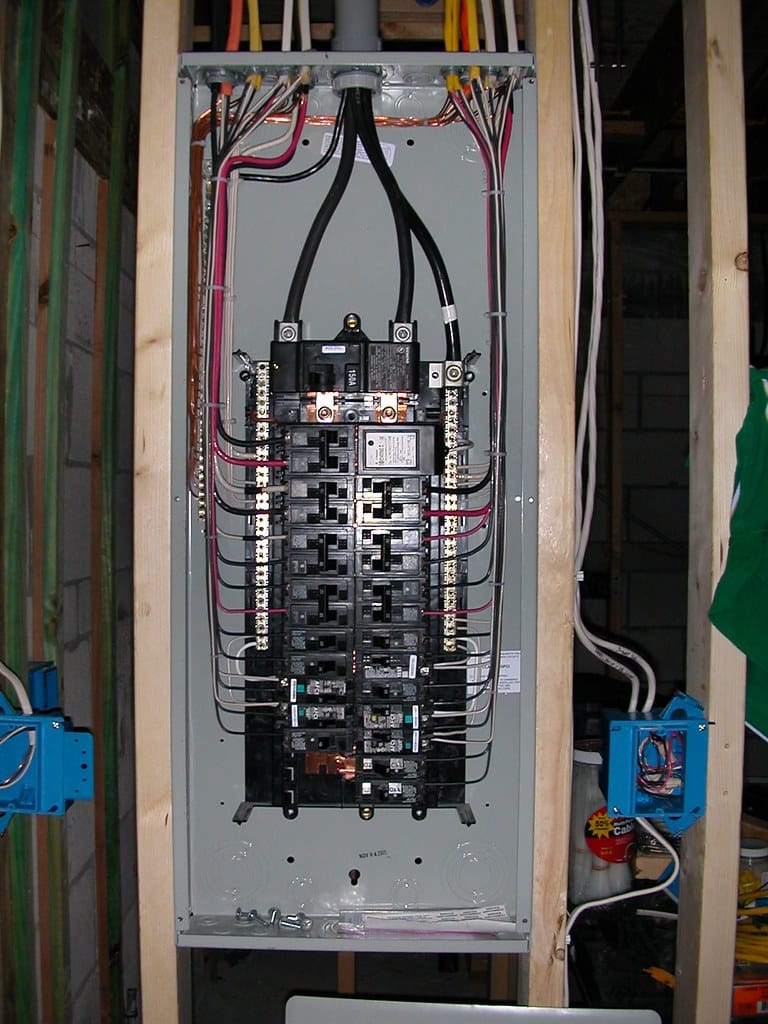
- Panel replacement: We remove your old panel, install a new one with enough space and proper grounding.
- Inspection and final hookup: Once the inspector signs off, the utility reconnects service, and you’re set for decades.
Cost in the Sacramento Area
Every home’s different, but most 200-amp upgrades fall between $2,000 – $4,000. Factors include panel location, meter placement, conduit runs, and wall repairs.
If your home’s wiring is in good shape, it’s on the lower end. If you’re adding solar or battery storage, that can raise the price but also increase efficiency long-term.
Real Example: East Sacramento Upgrade
A homeowner on 41st Street called us after their lights kept flickering every time the AC kicked on. Their home still had a 100-amp fuse box from the 1950s. They were planning to install a new kitchen with an induction cooktop.
We upgraded their service to 200 amps, installed a new main panel outside, and rewired a few key circuits. They went from constant nuisance trips to a quiet, stable system. The best part? They’re now set up to add solar next year without another upgrade.
Why This Matters in Sacramento
Our region’s electric demand keeps climbing. Summers are hotter, appliances are smarter, and EVs are quickly becoming the norm. Older homes simply weren’t built for it. That’s why knowing how many amps your home really needs isn’t a “nice-to-know” question—it’s essential for safety, comfort, and future readiness.
If you live in:
- Sacramento proper (Land Park, Curtis Park, East Sac, Midtown)
- Surrounding cities like Elk Grove, Roseville, Folsom, or Citrus Heights
…chances are your panel could use a checkup.
Final Takeaway
If you ask me, every homeowner should know their service size the same way they know their car’s mileage. It’s the foundation of your electrical safety and comfort. A properly sized panel keeps your lights stable, your appliances safe, and your home ready for whatever technology comes next.
So, how many amps does your home really need?
If you’re not sure, call Old Town Electric. We’ll inspect your panel, calculate your load, and tell you exactly what you need to keep your home safe and future-ready.