
Electric vehicle chargers place a sustained electrical load on a home. When problems exist in the electrical system, they often show up at night, not during short daytime charging sessions. This is why many Sacramento homeowners experience EV breaker trips overnight, even when the charger appears to work normally during the day.
Understanding why EV breakers trip at night requires looking at how EV chargers interact with older panels, continuous load rules, temperature changes, and local utility conditions. These issues are commonly identified during residential electrical inspections throughout the Sacramento area.
Table of Contents
Why EV Breakers Trip at Night More Often Than During the Day
EV charging at night is different from most household electrical use.
Key differences:
- Charging runs for several continuous hours
- Other major appliances are often operating
- The electrical system has less margin for error
EV chargers are classified as continuous loads. That means any weakness in the breaker, wiring, or panel is exposed over time. Short daytime charging rarely triggers these failures. Overnight charging does.
Continuous Load Rules and Why EV Breakers Trip at Night
One of the most common reasons why EV breakers trip at night is improper circuit sizing.
What the Electrical Code Requires
The National Electrical Code requires continuous loads to be limited to 80% of a circuit’s rating.
Examples:
- A 40-amp EV charger requires a 50-amp breaker
- Wiring must be sized for the full continuous load
- Load calculations must include all major household circuits
During inspections, EV chargers are often found installed on undersized breakers or conductors. These systems may function briefly, then trip after hours of charging.
Electrical Panel Limits in Sacramento Homes
Why EV Breakers Trip at Night in Older Panels
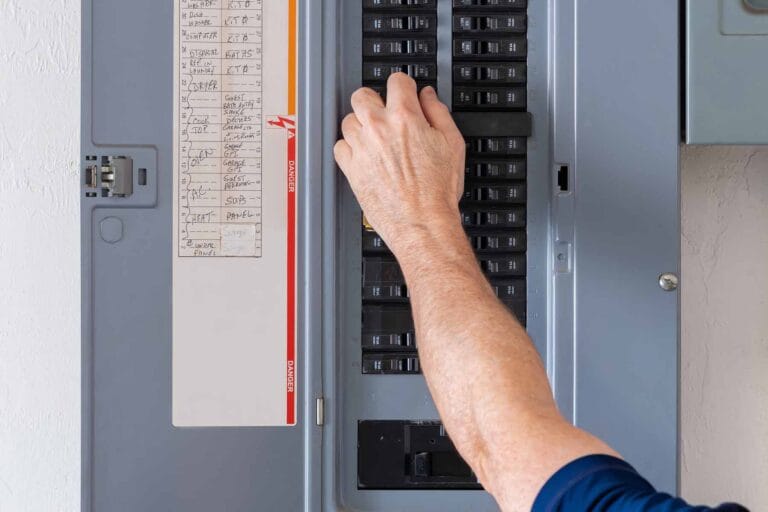
Many homes in Sacramento were built before EV charging was considered. Electrical panels in these properties are often already near capacity.
Common conditions include:
- 100-amp or early 125-amp services
- No available load margin
- Crowded panels with tandem breakers
- Panels showing heat stress
When an EV charger runs overnight, total demand exceeds what the panel can safely handle. The breaker trips to prevent damage.
This condition is frequently identified during electrical inspections in Sacramento neighborhoods built between the 1960s and 1990s.
Temperature Changes and Breaker Trips at Night
Temperature affects electrical connections.
At night:
- Ambient temperatures drop
- Conductors and terminals contract
- Loose connections worsen
- Electrical resistance increases
When resistance increases, heat builds faster at connection points. Under continuous EV charging load, breakers trip to protect the circuit.
Loose breaker lugs and improperly torqued terminations are commonly identified during EV charger service calls.
Utility Voltage Drop and Nighttime EV Charging
Why EV Breakers Trip at Night Due to Low Voltage
Utility voltage often drops overnight in residential areas.
When voltage drops:
- The EV charger draws more current
- Breakers heat up faster
- Thermal limits are reached sooner
If lights dim when EV charging begins, voltage drop may be contributing to the issue. This is more common in neighborhoods with older transformers or long service runs.
GFCI and AFCI Breakers and EV Chargers
Why EV Breakers Trip at Night on Newer Installations
Many newer homes use GFCI or AFCI breakers for EV circuits.
Problems commonly observed:
- EV chargers produce small ground leakage currents
- Electrical noise causes nuisance trips
- Incorrect breaker types are installed
These issues often appear overnight due to longer charge cycles and reduced background electrical load.
Wiring and Installation Problems
Installation Issues That Explain Why EV Breakers Trip at Night
Breaker trips are often symptoms of installation defects.
Common findings:
- Undersized conductors
- Excessive voltage drop on long runs
- Improper grounding
- Aluminum wiring without proper termination
These issues may not show up immediately but fail during extended overnight charging.
CPSC electrical safety guidance:
https://www.cpsc.gov/safety-education/safety-guides/home/electrical-safety
Is It Dangerous If the EV Breaker Keeps Tripping?
Yes. Repeated breaker trips indicate an unresolved electrical problem.
Risks include:
- Breaker contact damage
- Overheating of panel bus bars
- Insulation breakdown
- Increased fire risk
This is especially concerning in older Sacramento homes with aging electrical equipment.
How Licensed Electricians Diagnose Nighttime EV Breaker Trips
A proper evaluation typically includes:
- NEC load calculations
- Thermal imaging of the panel
- Voltage testing under load
- Verification of breaker and wire sizing
- Inspection of grounding and bonding
Replacing the breaker without diagnosis often leads to repeat failures.
Reliable Solutions for EV Breakers Tripping at Night
The correct solution depends on the findings.
Common fixes include:
- Lowering charger amperage settings
- Installing properly sized breakers and wiring
- Upgrading to a 200-amp panel
- Adding a dedicated EV subpanel
- Coordinating with the utility provider
Each solution should be based on measured data, not assumptions.
Internal links:
- EV charger installation in Sacramento
- Electrical panel upgrades in Sacramento
- Residential electrical inspections near Sacramento
Why EV Breakers Trip at Night in Sacramento Homes
Local housing age, climate conditions, and increasing EV adoption make this issue common for Sacramento homeowners. Homes built decades ago were not designed for sustained overnight charging loads.
Addressing why EV breakers trip at night requires a professional evaluation and code-compliant corrections.
Schedule a Professional Electrical Inspection
If an EV breaker trips repeatedly overnight, the electrical system is signaling a capacity or safety issue. Ignoring it can lead to equipment damage or fire hazards.
Homeowners seeking electrical services near Sacramento should schedule a licensed inspection to identify the cause and implement a permanent solution.